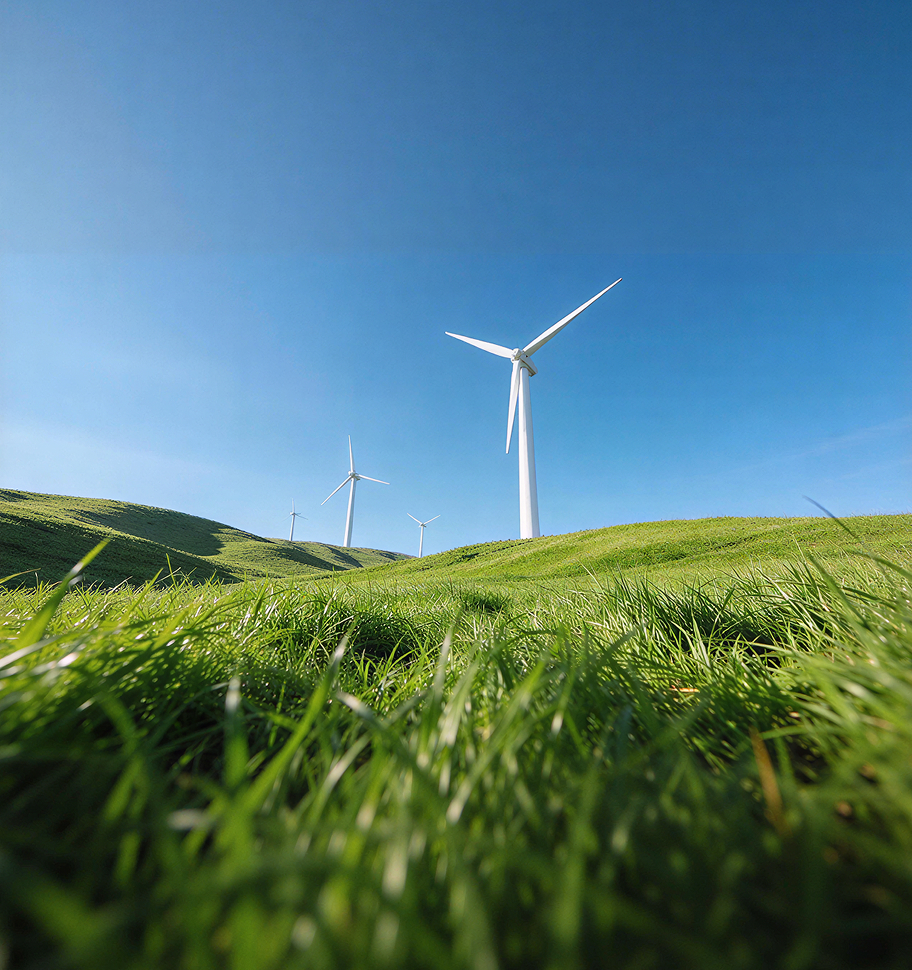
Clean design. Fast activation.
We handle everything from engineering to permits. You get a streamlined experience and a system that looks as good as it performs.

Site assessment
Wind resource evaluation and layout planning for optimal output.

Permitting & approvals
Documentation, permitting, and grid coordination handled end-to-end.

Commissioning
Testing, validation, and monitoring setup for go-live confidence.
Our footprint on the environment.
We’re committed to reducing emissions and building systems that help communities transition to cleaner, more resilient energy.
Reduce carbon intensity
Increased renewable production lowers dependence on fossil generation and reduces lifecycle emissions.
Improve efficiency
Smart monitoring and performance tuning maximize output from every installation.
Build long-term resilience
Hybrid storage and backup strategies keep critical loads online during outages.
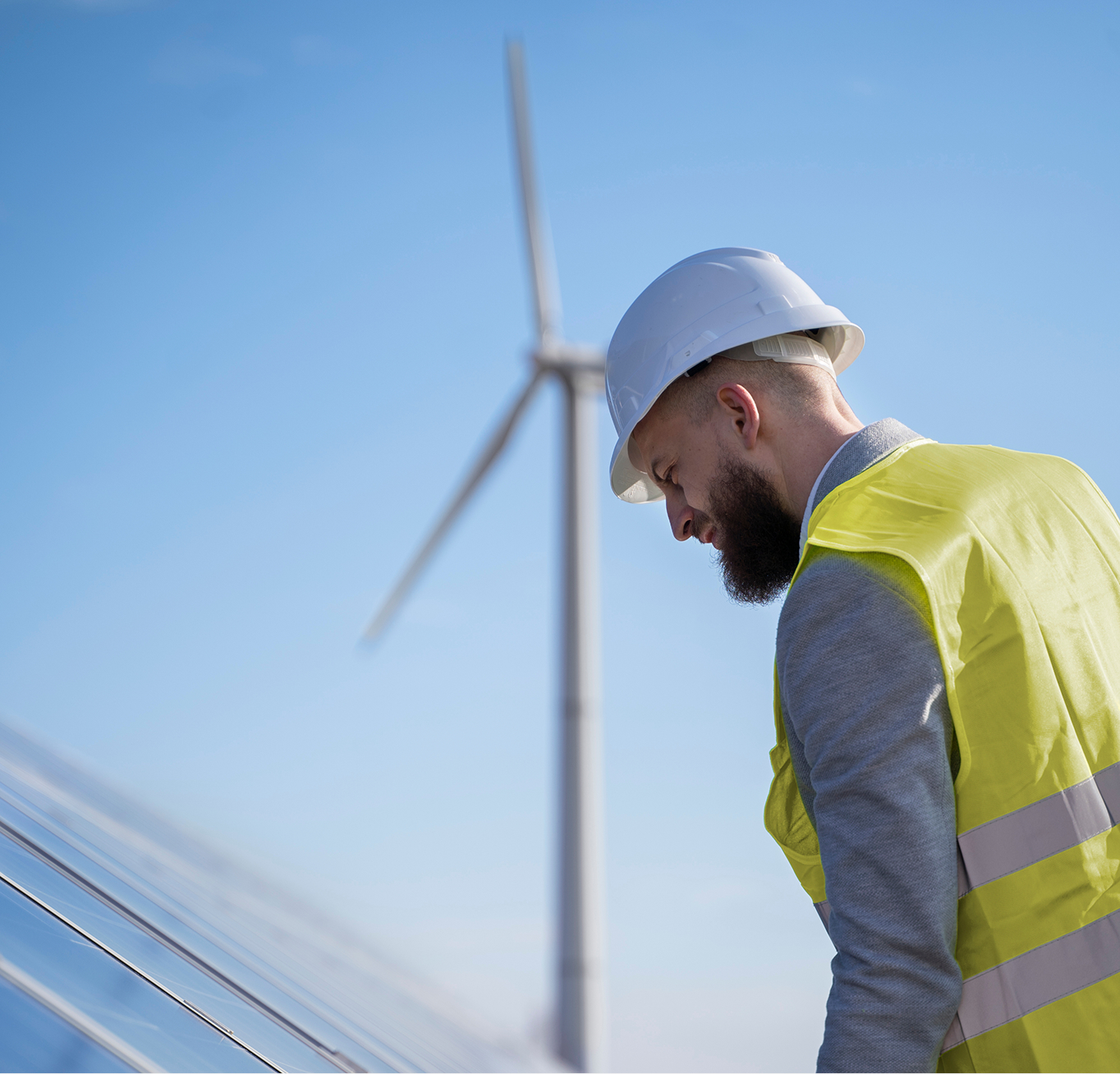
Expert insights on wind & alternative power.
From offshore deep-sea arrays to next-gen energy systems — answers to the questions shaping how communities move toward cleaner, scalable power.
Offshore wind energy is electricity generated by turbines installed in open water, where stronger and more consistent winds produce higher output. These arrays connect to the grid and deliver clean power to homes, industries, and coastal communities at scale.
Today's turbines use advanced blade design, silent-vortex aerodynamics, and smart pitch control to capture more energy per rotation. Combined with real-time wind forecasting, modern farms consistently outperform earlier generations while reducing noise and maintenance costs.
Beyond offshore wind, we design hybrid systems that integrate solar, battery storage, and grid-balancing technology. This gives clients flexible, site-specific energy stacks built to scale — from coastal arrays to land-based installations and industrial microgrids.
Wind projects create long-term jobs in engineering, operations, and maintenance while supplying affordable clean electricity. Reduced reliance on fossil fuels lowers emissions, stabilizes regional energy costs, and supports economic growth in port cities and coastal regions.
Wind output varies with weather, but modern farms use predictive analytics, geographic diversification, and storage to keep supply steady. When paired with alternative sources and grid management tools, wind remains a dependable pillar of a resilient clean-energy system.